How to learn anything fast is not about becoming an expert overnight. It is about learning the right things at the right time so you can make meaningful progress toward a specific goal.
Think about how most people learn.
They watch hours of tutorials, read dozens of articles, save hundreds of videos, take notes, and eventually feel like they have learned a lot. But when it is time to actually use that knowledge, they struggle to produce anything.
The problem isn’t always a lack of intelligence or effort. Often, the learning process itself is inefficient.
You don’t need to learn everything about Photoshop before designing your first image. You don’t need to understand every principle of guitar theory before playing your first song. And you don’t need to master an entire programming language before building your first useful project.
A better approach is to start with the result you want, identify the specific skills required, and learn those skills through focused practice.
In this guide, you’ll learn how to learn anything fast by combining goal-based learning, technique stacking, deliberate practice, progressive difficulty, and deep focus.
Can You Really Learn Anything in 2 Weeks?
Yes—but there is an important distinction.
You probably cannot become a master guitarist, fluent Spanish speaker, professional designer, or expert programmer in 14 days.
But you can make surprisingly significant progress in two weeks if you define learning correctly.
Instead of asking:
“How can I master this subject?”
Ask:
“What do I need to know and practice to accomplish this specific goal?”
For example:
- Instead of “learn Photoshop,” aim to create three professional-looking social media graphics.
- Instead of “learn coding,” aim to build a simple website.
- Instead of “learn Spanish,” aim to hold a basic five-minute conversation.
- Instead of “learn video editing,” aim to produce one complete short-form video.
- Instead of “learn Excel,” aim to build a financial model using the functions you actually need.
This changes everything.
Your goal isn’t to collect information. Your goal is to become capable of doing something.
1. Start With the Result, Not the Subject
One of the biggest mistakes people make when learning is starting with the subject instead of the outcome.
Suppose you decide to learn video editing.
You search for:
“Complete video editing course for beginners.”
You find a 12-hour course covering:
- Every editing tool
- Every menu
- Advanced color grading
- Audio engineering
- Motion graphics
- Keyboard shortcuts
- Effects
- Transitions
- Export settings
- And dozens of other topics
You spend two weeks watching the course.
But then someone asks you to edit a 60-second video.
You don’t know where to start.
Instead, begin with the project.
Your goal might be:
“Create a 60-second YouTube Short with captions, background music, cuts, B-roll and basic transitions.”
Now you only need to learn the techniques necessary to complete that project.
This is one of the most powerful principles for learning quickly:
Let the goal determine what you learn.
You don’t need the entire map when you’re only trying to reach the next destination.
2. Break Skills Into Smaller Techniques
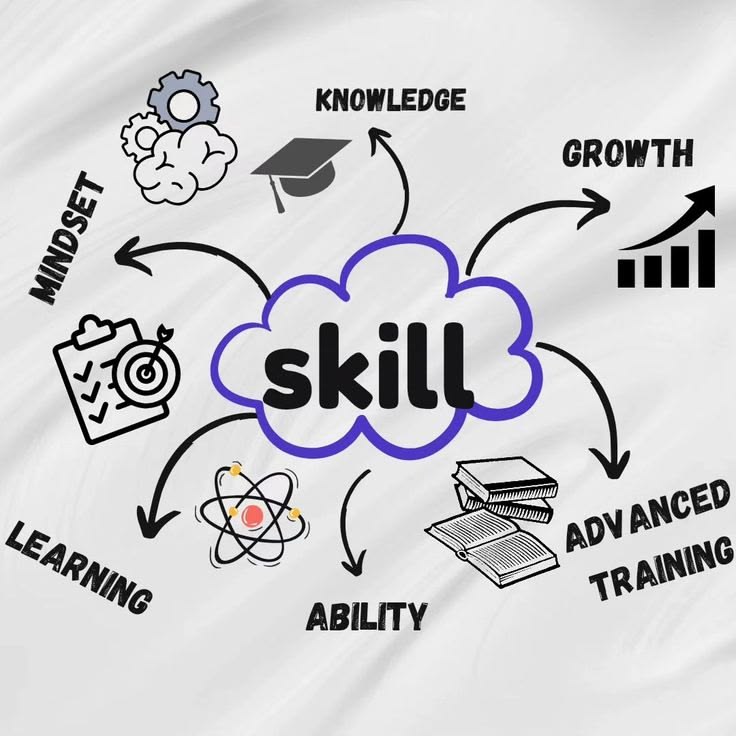
A large skill can feel overwhelming because we think of it as one enormous thing.
But most skills are actually combinations of smaller abilities.
For example, “learning Photoshop” isn’t one skill.
It includes techniques such as:
- Selecting objects
- Removing backgrounds
- Using layers
- Masking
- Adjusting colors
- Adding text
- Working with shapes
- Retouching images
- Creating compositions
Once you see a skill this way, learning becomes much easier.
Instead of trying to learn Photoshop, you can say:
“Today I need to remove the background from this product photo.
“You search specifically for that technique, practice it, and apply it immediately.
Then you encounter another problem.
You need to change the color.
So you learn another technique.
Then you need to add text.
Another technique.
Over time, these techniques begin connecting.
This process can be called technique stacking.
Each technique becomes another tool you can use when solving real problems.
Why technique stacking works.
Imagine trying to build a house.
You don’t need to understand every aspect of architecture before laying the first brick.
You need the knowledge required for the next step.
As you build, you acquire more knowledge and develop more capability.
Learning works similarly.
Learn → Apply → Encounter a problem → Find a solution → Practice → Repeat.
The process becomes much more efficient than consuming information without application.
3. Practice Immediately Instead of Waiting to Feel Ready
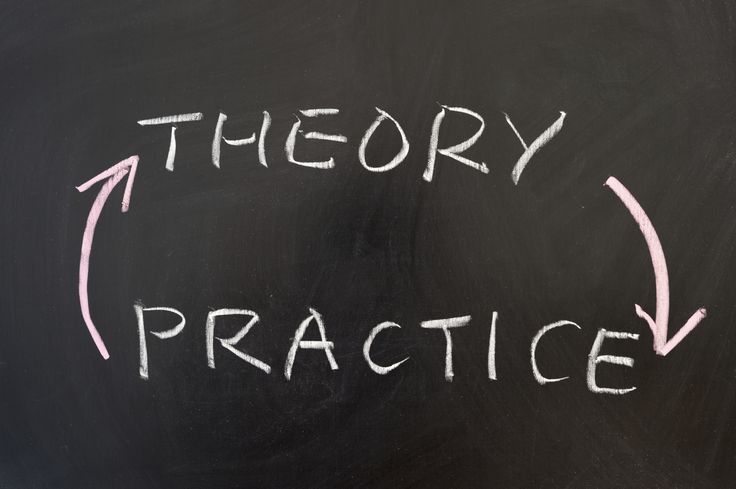
A common learning trap is believing you need more knowledge before you can start.
You don’t.
In fact, starting often reveals exactly what you need to learn.
Imagine you’re learning Python.
You could spend weeks studying:
- Variables
- Data types
- Loops
- Functions
- Classes
- Modules
- Object-oriented
- programming
- Algorithms
Or you could choose a small project.
For example:
“Build a simple expense tracker.”
While building it, you’ll naturally discover what you don’t know.
Maybe you need to store information.
So you learn lists or dictionaries.
Maybe you need to calculate totals.
You learn the relevant operations.
Maybe you want to save the information.
You learn file handling.
Suddenly, your questions become specific.
And specific questions are much easier to answer than:
“How do I learn Python?”
4. Use Progressive Overload for Your Brain
Your body becomes stronger when you gradually expose it to increasing physical demands.
Your brain can also improve through progressively challenging practice.
This doesn’t mean simply studying for more hours.
It means increasing the difficulty of what you are trying to accomplish.
For example, if you’re learning public speaking:
- Level 1: Speak alone for two minutes.
- Level 2: Record yourself speaking for five minutes.
- Level 3: Explain a topic to a friend.
- Level 4: Give a short presentation to several people.
- Level 5: Deliver a presentation without notes.
Each step challenges you slightly more.
The same principle applies to almost anything.
If you always practice something easy, improvement eventually slows down.
If you make the challenge impossibly difficult, you may become frustrated.
The sweet spot is challenging enough to require effort but manageable enough to keep practicing.
5. Focus on Active Learning
There is a major difference between recognizing information and being able to use it.
You might watch someone solve a problem and think:
“That makes sense.”
Then you try solving a similar problem yourself and suddenly realize you don’t actually know how to do it.
That’s why active learning is so important.
Instead of only:
- Watching tutorials
- Reading books
- Highlighting notes
- Listening to podcasts
Add activities that force you to retrieve and use information.
Try:
- Building something
- Solving problems
- Explaining the concept without notes
- Testing yourself
- Teaching someone else
- Recreating an example from memory
- Practicing real-world tasks
The uncomfortable part is useful.
When you struggle to remember something, you’ve found a gap in your knowledge.
Now you know what to work on.
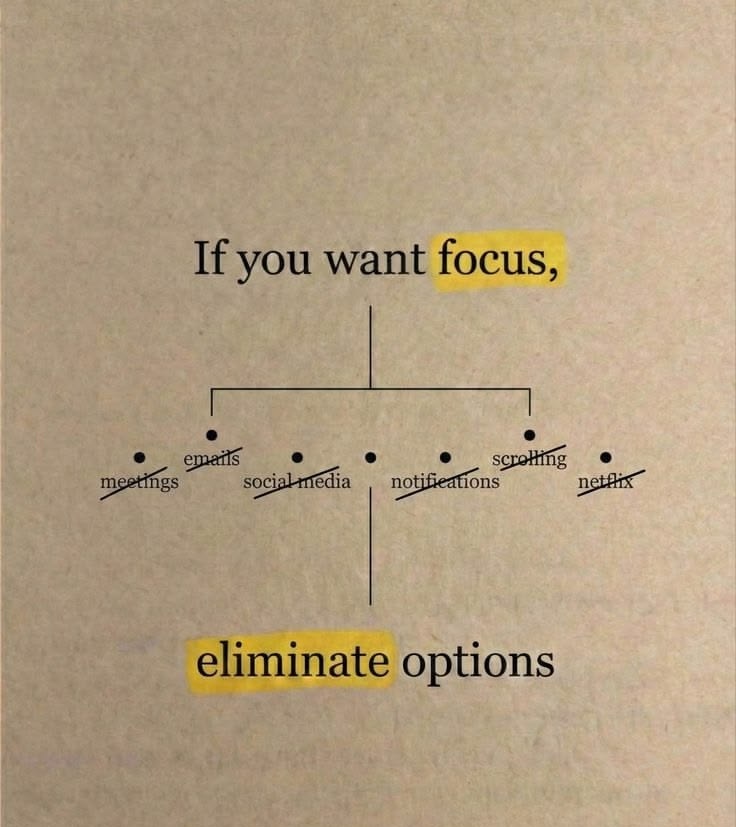
6. Eliminate Distractions During Deep Work
If you want to learn quickly, focused attention is one of your biggest advantages.
You can sit at a desk for five hours while constantly checking your phone, switching between tabs and replying to messages.
Or you can work with complete concentration for 60–90 minutes.
The second session can be dramatically more productive.
When you’re learning something difficult, try creating a distraction-free environment.
Put your phone away.
Close unnecessary browser tabs.
Turn off notifications.
Choose one task.
Set a specific time block.
Then work on that task without constantly switching activities.
For example:
60-minute learning session
- 5 minutes: Define today’s goal
- 10 minutes: Study the specific technique
- 35 minutes: Apply it to a real project
- 10 minutes: Review mistakes and record what you learned
This is much more useful than randomly consuming content for an hour.
7. Create Pressure Without Creating Chaos
Deadlines can dramatically change how seriously we approach learning.
When something is optional, it’s easy to postpone.
When you have a real deadline, your brain becomes much more focused on solving the problems standing between you and the outcome.
You can create a safe form of pressure for yourself.
For example:
- Promise to publish a video every Sunday.
- Enter a beginner competition.
- Commit to presenting your project to a friend.
- Set a two-week project deadline.
- Build something for a real person.
- Apply for a role that requires the skill you’re developing.
- Publish your work publicly.
The key is to create accountability without putting yourself in unnecessary financial or personal danger.
You don’t need to quit your job or put yourself into debt just to force yourself to learn.
A simple deadline can be enough.
8. Learn Through Problems, Not Just Lessons

Problems are powerful teachers because they create a reason to remember information.
Suppose you’re learning Excel.
Instead of watching 20 tutorials, create a practical project:
“Build a monthly personal finance dashboard.”
You’ll probably need to learn:
- SUM
- IF
- SUMIFS
- XLOOKUP
- Charts
- Conditional formatting
- Basic data organization
Now every function has a purpose.
You’re not memorizing random formulas.
You’re solving a problem.
This makes learning more relevant and gives you something tangible at the end.
9. Use the 80/20 Rule Carefully
You may have heard that 80% of results often come from 20% of efforts.
The exact numbers aren’t a universal law, but the underlying idea is useful:
Some knowledge is far more valuable than other knowledge.
If you’re learning a skill for a specific purpose, identify the small group of techniques that will produce the biggest improvement.
For example, someone learning content creation may get more immediate value from learning:
- Writing strong hooks
- Basic storytelling
- Editing efficiently
- Understanding their audience
- Creating consistently
They probably don’t need to understand every advanced feature of their editing software on day one.
Ask yourself:
“Which skills will give me the biggest practical result right now?”
Then prioritize those.
10. A Simple 14-Day Learning Plan
Here’s a practical framework you can use to learn a new skill over two weeks.
Days 1–2: Define the outcome
Choose one specific result.
Don’t say:”I want to learn graphic design.
“Say:”I want to create five professional social media graphics.
“Your goal should be measurable.
Days 3–4: Identify the essential techniques
Break the project into smaller tasks.
Write down everything you don’t know how to do.
Then find resources for those specific problems.
Avoid consuming entire courses unless they directly help with your project.
Days 5–7: Build your first version
Start creating.
Expect mistakes.
Your first attempt isn’t supposed to be excellent.
It’s supposed to reveal what you need to learn next.
Days 8–10: Fix your weaknesses
Review your work.
Find the three biggest problems.
Learn techniques that specifically solve them.
Then apply those techniques immediately.
Days 11–12: Increase the difficulty
Try something slightly harder.
Add another feature.
Work faster.
Reduce your dependence on tutorials.
Try solving problems yourself before searching for answers.
Days 13–14: Complete a real project
Finish something you can actually show someone.
It could be:
- A website
- A video
- A spreadsheet
- An illustration
- A presentation
- A short story
- A basic application
- A conversation in another language
Your objective is not to prove that you’ve mastered the skill.
Your objective is to prove that you can now do something you couldn’t do two weeks ago.
The Fastest Way to Learn Is to Use What You Learn
Learning becomes much more powerful when knowledge immediately turns into action.
Think about the difference between these two approaches.
Approach A:
Watch → Read → Take notes → Watch another tutorial → Save resources → Watch another course.
Approach B:
Choose goal → Start project → Encounter problem → Learn technique → Apply technique → Make mistake → Improve → Repeat.
Approach B may feel harder.
But that’s exactly why it works better.
You’re constantly forcing your brain to retrieve information, solve problems and make decisions.
You aren’t simply collecting knowledge.
You’re building capability.
What You Shouldn’t Do When Learning Fast
Learning quickly doesn’t mean rushing recklessly.
Avoid these common mistakes.
Don’t try to master everything at once
Choose one outcome.
Don’t confuse information with skill
Knowing how something works doesn’t necessarily mean you can do it.
Don’t constantly switch resources
Pick a few reliable resources and actually practice.
Don’t chase perfection
Your first project will probably be bad.
That’s normal.
Don’t skip fundamentals
Learning efficiently doesn’t mean avoiding important fundamentals. It means learning the fundamentals that are relevant to your current goal.
Don’t rely completely on AI
AI can explain concepts, generate practice exercises, provide feedback and help you overcome obstacles. But you still need to think, practice and produce the work yourself.
The Real Secret: Learn for Utility
The fastest learners aren’t necessarily the people who consume the most information.
They’re often the people who can quickly answer:
“What do I need to know to solve this problem?”
That’s a powerful shift.
Instead of trying to know everything about a subject, become good at finding and applying the information you need.
Want to learn video editing?
Edit a video.
Want to learn programming?
Build something.
Want to learn sales?
Try selling something.
Want to improve your writing?
Write every day.
Want to learn a language?
Start speaking.
Want to learn fitness?
Follow a sensible training program and track your progress.
The pattern is the same:
Choose a goal → Start doing → Find what you’re missing → Learn it → Apply it → Get feedback → Repeat.
That’s how knowledge turns into skill.
Final Thoughts
You don’t need to spend years preparing before you can start making progress.
You also don’t need to believe that you can become an expert in two weeks.
The more useful idea is somewhere between those extremes.
Two focused weeks can completely change your relationship with a skill.
You can go from knowing almost nothing to completing your first meaningful project. You can discover whether the skill is right for you. You can build foundational techniques that make future learning easier.
Most importantly, you can stop waiting until you feel ready.
Choose something you genuinely want to accomplish.
Define the result.
Break it into smaller techniques.
Practice them on a real project.
Remove distractions.
Increase the challenge gradually.
Get feedback.
Repeat.
Don’t spend the next two weeks preparing to start
Start today—and let the problems you encounter tell you what to learn next.