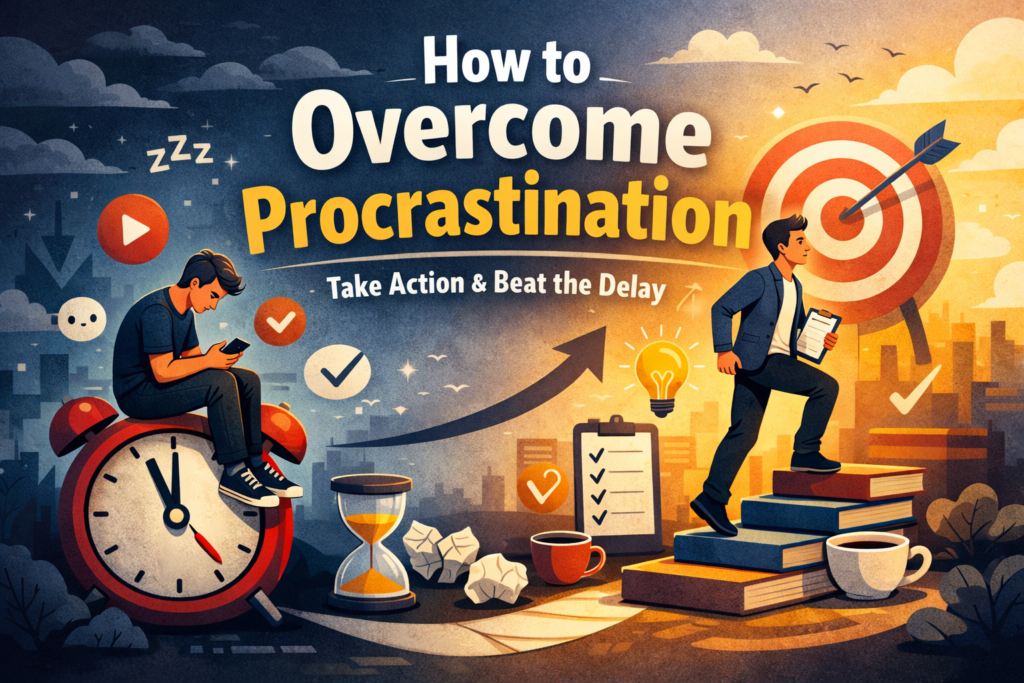
How to overcome procrastination is one of the most searched self-improvement questions today—and for a good reason. Almost everyone knows what they should be doing, yet somehow delays it until “tomorrow.” This blog is not another generic motivational lecture. It’s a deep, practical, human-written guide that helps you understand why you procrastinate and how to overcome procrastination step by step in real life.
If procrastination has been silently stealing your time, confidence, and potential, this article will help you take control again.
Table of Contents :
- What Procrastination Really Is (And What It’s Not)
- Why We Procrastinate Even When We Care
- The Hidden Cost of Procrastination
- How to Overcome Procrastination Using Awareness
- How to Overcome Procrastination with Small, Repeatable Actions
- How to Overcome Procrastination with Small, Repeatable Actions
- The Role of Discipline Over Motivation
- Mental Triggers That Instantly Reduce Procrastination
- Daily Systems That Prevent Procrastination Long-Term
- Final Thoughts: Becoming Someone Who Takes Action
1. What Procrastination Really Is (And What It’s Not)

Procrastination is not laziness.
Lazy people don’t want to do the work. Procrastinators usually care deeply—but they delay because of fear, overwhelm, or emotional resistance. Procrastination is an emotional regulation problem, not a time management issue.
You’re not procrastinating because you lack ambition. You’re procrastinating because your brain is trying to avoid discomfort.
Understanding this distinction is the first step in learning how to overcome procrastination effectively instead of fighting yourself.
2. Why We Procrastinate Even When We Care

Before you fix procrastination, you must understand its roots. Common reasons include:
- Fear of failure – “What if I try and fail?”
- Fear of success – “What if my life changes?”
- Perfectionism – “If it can’t be perfect, why start?”
- Overwhelm – Too many steps, unclear direction.
- Instant gratification – Dopamine from phone, reels, notifications.
Your brain is wired to choose comfort over growth. Knowing how to overcome procrastination means working with your brain, not against it.
Another subtle reason people procrastinate is identity conflict. Deep down, you may want change, but your current identity resists it. For example, if you’ve always seen yourself as “someone who struggles with consistency,” taking focused action feels unfamiliar—and the brain avoids unfamiliar territory. Procrastination then becomes a way to protect the old identity.
This is why simply knowing how to overcome procrastination intellectually doesn’t always work. Change requires identity upgrades. When your actions align with who you believe you are, resistance fades. Until then, procrastination acts as a comfort zone, even when it’s painful.
3. The Hidden Cost of Procrastination
Procrastination doesn’t just waste time. It slowly damages:
- Self-trust (“I never do what I say”)
- Confidence
- Opportunities
- Mental peace
- Long-term discipline
The most dangerous part? Procrastination compounds silently.
A day delayed becomes a month. A month becomes a year. That’s why learning how to overcome procrastination is not optional—it’s foundational for success in any area of life.
4. How to Overcome Procrastination Using Awareness
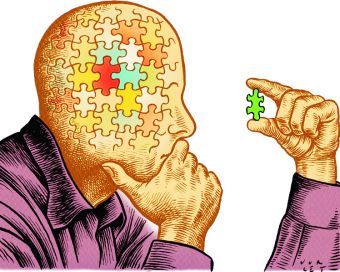
The first real solution is awareness.
Most people try to fix procrastination with hacks, but awareness changes behavior permanently.
Ask yourself:
- What exactly am I avoiding?
- What emotion comes up when I think about starting?
- Is this task unclear or emotionally uncomfortable?
When you name the emotion, you reduce its power.
One simple rule:
You can’t fix what you don’t notice.
Awareness creates a pause—and in that pause, you regain control. This is a powerful yet underrated way in how to overcome procrastination.
Awareness also means noticing your procrastination patterns, not judging them. Do you procrastinate more in the evening? Before difficult conversations? When tasks lack clear deadlines? Patterns reveal triggers.
Once you identify these triggers, you stop seeing procrastination as a personal flaw and start treating it as data. This shift alone reduces emotional weight. Learning how to overcome procrastination becomes less about forcing action and more about making better decisions upstream—before resistance even appears.
5. How to Overcome Procrastination by Designing Your Environment
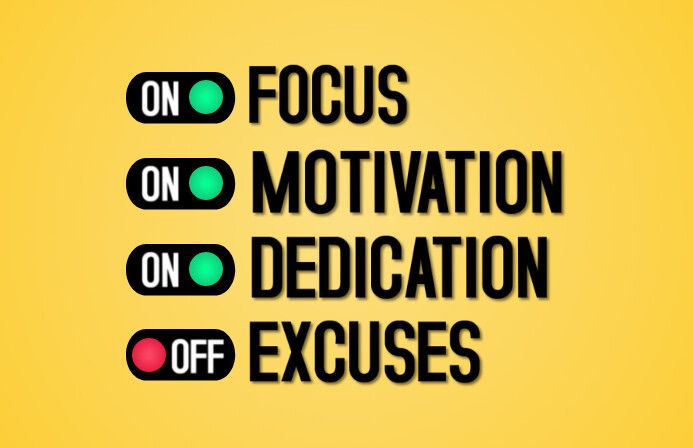
Your environment shapes your behavior more than motivation ever will.
If your phone is next to you, you’ll procrastinate. If distractions are easy, discipline becomes hard.
Environment design examples:
- Keep your phone in another room while working
- Use website blockers during focus hours
- Keep your workspace clean and specific to one task
- Make bad habits hard and good habits easy
People who know how to overcome procrastination don’t rely on willpower—they remove friction.
6. How to Overcome Procrastination with Small, Repeatable Actions
One of the biggest mistakes people make is trying to “feel motivated” before starting.
Action comes before motivation, not after.
Use the 2-minute rule:
- Tell yourself: “I’ll do this for just 2 minutes.”
Most of the time, once you start, momentum kicks in.
Progress beats perfection. Starting beats waiting. Consistency beats intensity.
This principle is central to how to overcome procrastination sustainably.
7. The Role of Discipline Over Motivation
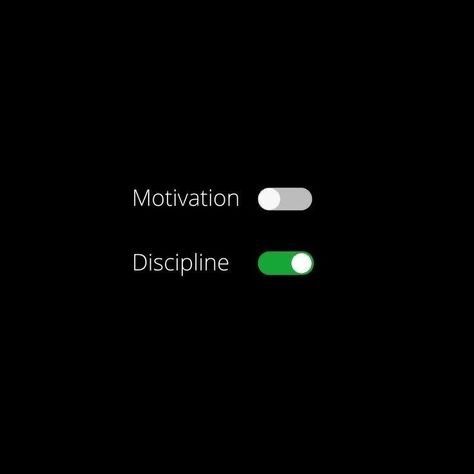
Motivation is emotional.
Discipline is structural.
Motivation comes and goes.
Discipline stays.
Instead of asking: ❌ “Do I feel like doing this?
”Ask: ✅ “Is this part of who I’m becoming?”
Identity-based action is one of the strongest tools in how to overcome procrastination.
When you see yourself as:
- “I’m someone who shows up”
- “I’m someone who finishes what I start”
Your behavior naturally follows.
Discipline doesn’t mean being harsh with yourself. It means keeping promises when emotions fluctuate. One underrated aspect of discipline is self-respect. Every time you act despite resistance, you reinforce trust in yourself.
Procrastination thrives when self-trust is low. Discipline rebuilds it slowly. That’s why people who truly learn how to overcome procrastination don’t aim for dramatic transformations. They aim for small, repeatable wins that prove, day by day, “I can rely on myself.”
8. Mental Triggers That Instantly Reduce Procrastination
Here are powerful mental shifts that reduce procrastination instantly:
- Lower the bar – Aim for progress, not excellence
- Focus on process, not outcome
- Forgive yourself quickly – Guilt fuels procrastination
- Detach emotion from action – Do it even if you don’t feel like it
Procrastination thrives on emotional weight.
Lighten the task mentally, and action becomes easier.
This mindset shift is essential in mastering how to overcome procrastination.
9. Daily Systems That Prevent Procrastination Long-Term
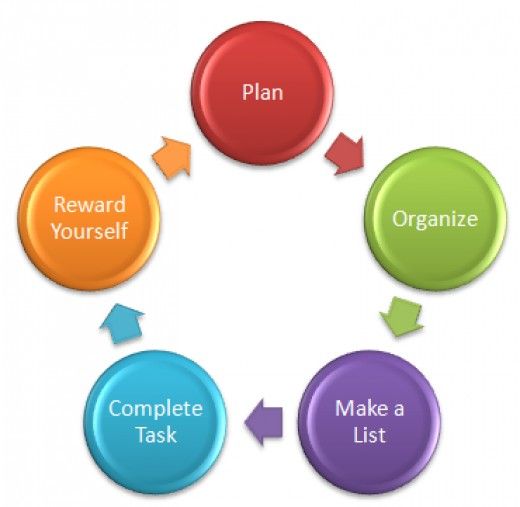
Short-term hacks help, but systems change lives.
Build systems like:
- A fixed morning routine
- Time-blocked work sessions
- Clear daily priorities (Top 3 tasks)
- Weekly reviews
When your day has structure, procrastination has less space to exist.
People who truly understand how to overcome procrastination don’t wait for discipline—they schedule it.
10. Final Thoughts: Becoming Someone Who Takes Action
Learning how to overcome procrastination is not about becoming superhuman. It’s about becoming honest, aware, and intentional.
You will still feel resistance. You will still feel discomfort. But you’ll stop letting those feelings control your actions.
Start small. Show up imperfectly. Repeat daily.
Over time, procrastination loses its grip—not because you fought harder, but because you became smarter.
And that’s how real change happens.
Thanks! Keep Improving!
Also Read :
1.How to get A Sharp Jawline: Become Attractive and Confidence
https://digitalmindsfitness.com/how-to-get-a-sharp-jawline-become-attractive-and-confident/
2. How to build an Aesthetic Physique V-Tapered Body